Journal
My thoughts wander among words—does that not also count as a world I have seen?
I have now made a decision: one day, I will reach the edges of the world, to the Muryak refugee camp; to Skid Row in LA; and back to the hometowns in China. Where the oldest civilizations rest, and places where stories are rarely heard.
I want to spread their thoughts to the world, and also bring them to my heart. What I seek is not merely the gleam of Ivy League prestige, but the simplest and most sincere emotions of humanity. Too often, the truest wisdom of this world hides in the bustling streets of distant places. And I intend to go to those places, to search for answers of my own.
— 3/13/2026
At first, I didn’t think much about the people around me.
They were just there—on buses, in waiting lines, passing by.
Looking back, maybe this curiosity was always there.
I was the kind of child who asked too many questions—
questions that didn’t belong to me.
Why couldn’t someone afford a house?
What would happen to their child?
Why did adults speak in ways that felt incomplete?
But at some point, something shifted.
I started noticing how much I didn’t know about the lives around me.
I didn’t understand the answers.
I didn’t even understand the questions.
But I remember being told, over and over again:
“Why do you care so much?”
“Why are you so nosy?”
In those moments, I would instinctively press my lips and smile, embarrassed, forcing a period onto my unfinished sentences.
And eventually, I learned to stop asking—at least out loud.
But the questions never really went away.
They just became quieter.
More careful.
More observant.
Now, I am learning how to ask them again.
— 4/14/2026
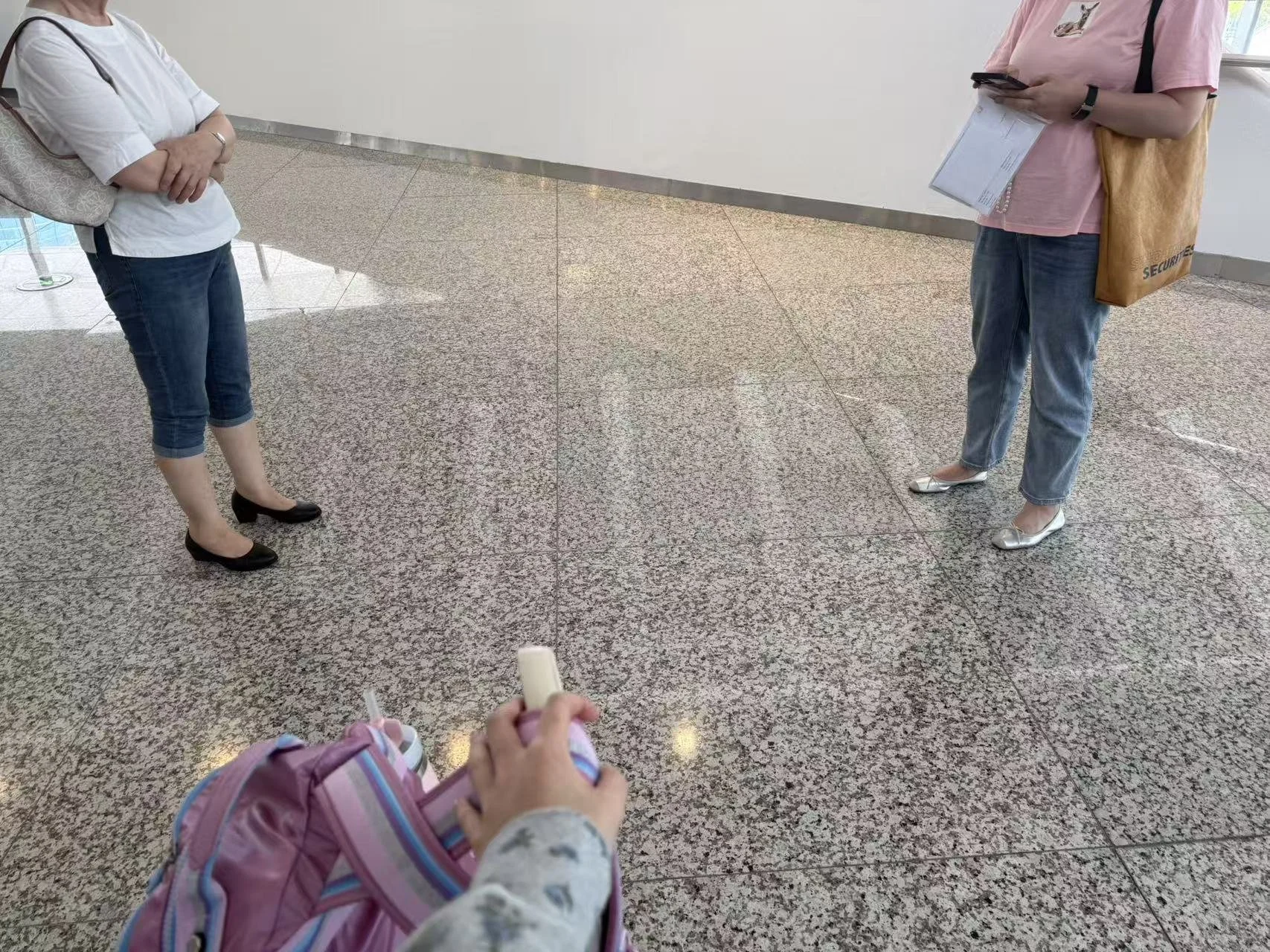
Mom and grandma when they send me to America and I won’t be seeing them for a year. I asked for a hug, and instant retreat. That’s when this picture was taken.
— 08/12/2025
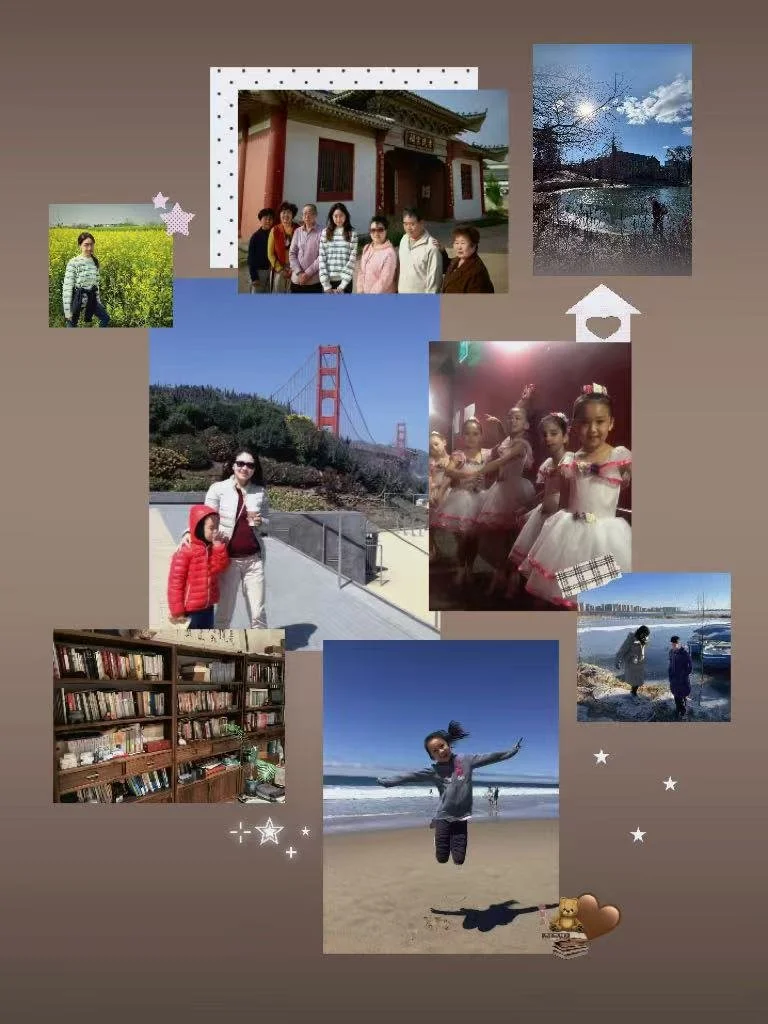
“Kiddo, why do you think this homeless person is playing violin on the street?”
An old man on a park bench nodded toward the musician. The violinist stood, as he did every day, so still that time seemed to flow around him like a breeze, indifferent to the patches on his coat.
“For money,” I answered without a second thought.
The old man shook his head slowly. “You see the show for money,” he said gently. “But I hear the notes of passion. Not everything is about money, even if sometimes it seems that way.”
Since then, I came to the farmer’s market in Palo Alto everyday, I saw the man played, waved to passersby, sang improvised “thank you” with a radiant smile for coins offered. He stood, as time seemed to flow like a breeze, indifferent to the patches on his coat. In that moment, I felt my heart pump in a strange, new rhythm — a syncopated beat of question, curiosity, and shame. I understood bias before I knew its name and vowed to see people behind my preconceptions.
The last sentence the old man told me was: “Never forget to learn while living.” And I kept that in mind. I was four years old then, but the words was carved deeply in my heart.
I wanted to build platforms where others could feel that “heart-pump.” As a talkative kid, I found my “notes of passion” in debate. From policies to ethical dilemmas, it allowed me to understand more people. I found a club in middle school, carried it to high school, led tournaments annually. But true victory wasn’t winning, it was when a quiet student finds her voice to defend the marginalized, when teammates question their assumptions. It became my way to turn abstract ideas into practice, to use my education to empower others.
— 12/30/2025
We tend to sort qualities into strengths and weaknesses, but sometimes both sides are minted from the same mold, just like every coin has two sides.
“Really,” she said. "You? I don’t even dare say I understand myself.” She stared at me with disbelief.
But I do understand myself.
My friend looked surprised, almost amused.
I didn’t answer right away. I just sat there in silence. I raised an eyebrow and looked at her, then lowered my head and took a sip of my martini. It burned, too sharp for my taste. I didn’t like it. By the time she moved on, I had already folded my emotions out of sight.
For several years, I believed I understood the essence of things earlier than most people. Teachers smiled when I spoke. Adults called me perceptive. In conversations, I often noticed patterns others hadn’t seen.
At the same time, I was aware of the gap between myself and people who were truly exceptional. They and I could share the same background knowledge, yet they could explain it clearly, extract deeper meanings, and apply it effortlessly in life. I couldn’t. And I knew that if one day I could, it would take a long time, years of study and accumulation.
I wanted to become someone who sees things the way they did.
In the process of studying and observing, I would suddenly think, I’m not as sharp as I imagined. Maybe Socrates was right: wisdom begins with knowing how little you know.
And I was only beginning.
I saw the pattern most clearly in my grandmother, the only human being I’ve lived with for my entire 18 years of life. One evening, she received a phone call telling her that her mother had passed away. She listened, said calmly, “Okay,” and hung up. Then she began calling her four younger siblings one by one to inform them. While they cried on the other end, she “comforted” them: “She was ninety. It was a peaceful passing. I’ll contact the funeral home. You should compose yourselves and prepare.”
That night, I couldn’t sleep. I crouched by her door, straining to hear whether she might cry. She never did. Not that night, not that week. She simply continued with her routine, taking care of me and my brother as if nothing had happened.
When I finally asked, “Grandma, aren’t you sad?” she looked at me with no emotions in her eyes. “What is there to be sad about? Birth, aging, illness, death—it’s only natural.” Then a disdainful look appeared in her eyes, “I don’t understand why they were crying. They are old now, they should learn.”
At that moment, I felt a quiet recognition I didn’t want to admit: I could become her. I wasn’t sure whether I admired her certainty, or feared that one day I’d have the same disdainful look in my eyes.
Looking back now, I can see my naivety. Sitting under the same late-night light one year later, writing my transfer essays, I began peeling myself open bit by bit. The emotions I cannot control, behaviors whose roots I cannot trace, the impulses I cannot dissect. My friend was right. Now I am the one looking at myself with disbelief.
Sometimes, when I argue with my boyfriend and try to prove him wrong, I go through the logic carefully and end up thinking, reluctantly: “Wait, he actually is right.” I admit, “Fine, you’re right.” But then anger rises. What angered me wasn’t him. It was the fact that he was right.
I have always thought of myself as caring and helpful. Friends come to me with questions about relationships, family, or the future. Yet at some point, I began enjoying the moment when events unfolded exactly as I predicted, a quiet voice in my head saying, “I told you so.” The satisfaction of being right was turning into superiority.
For a long time, I believed my sharpness was a virtue in itself. But I began to see that being right had quietly become my anchor. When teachers praised my insight, I felt steady. When friends sought my advice, I felt necessary. Clarity gave me position. Interpretation gave me value.
When someone disagreed with me, it was never just disagreement. It unsettled something deeper. If I was not the one who saw clearly, who was I? I had tied my sense of worth to the speed and certainty of my conclusions. Being right made me feel secure; being wrong made me feel diminished.
That is why my grandmother frightened me. It was not her composure in the face of death, nor even the disdain in her voice. It was the possibility that certainty could harden into distance. That clarity, unexamined, could become superiority. I saw how easily understanding could turn into insulation.
My instinct to interpret is minted from the same mold as my arrogance.
I had to rethink what being right should mean to me.
If my identity depends on being right, then I will always resist being wrong. And if I resist being wrong, I will stop listening. Growth requires exposure — to uncertainty, to contradiction, to the limits of my own perception. Arrogance, I realized, is not loud confidence. It is fear disguised as certainty.
Being right should not be proof of worth. It should be provisional — an invitation to test, revise, and refine. My habit of analysis must become a tool for connection rather than separation. To interpret is not to dominate a conversation, but to enter it with the possibility of being changed.
I am still learning how to loosen my grip on certainty. But I no longer want to be the person who stands above others because she sees faster. I want to be the person who sees more clearly because she is willing to look again.
I return to a sentence from C. S. Lewis: “Humility is not thinking less of yourself, it’s thinking of yourself less.” Real humility is not abandoning understanding. It is refusing to turn understanding into identity. My habit of analysis should not separate me from others; it should push me to listen more carefully, question myself more often, and leave room for conclusions that are not my own.
— 2/28/2026